
Electrochemical Impedance Spectroscopy
Ultra-low power, ultra-compact impedance measurement. The world’s smallest, widest-band (0.1–200 kHz) Cortex‑M4 intelligent impedance chip.
Published spec EIS platformThe pioneer of bio-digital twin
Reading life with the precision of system semiconductors. Revealing invisible truth with the insight of AI.
The technology map
Seven application areas, each with different chemistry and a different question — and all of them running the same measurement chain underneath.
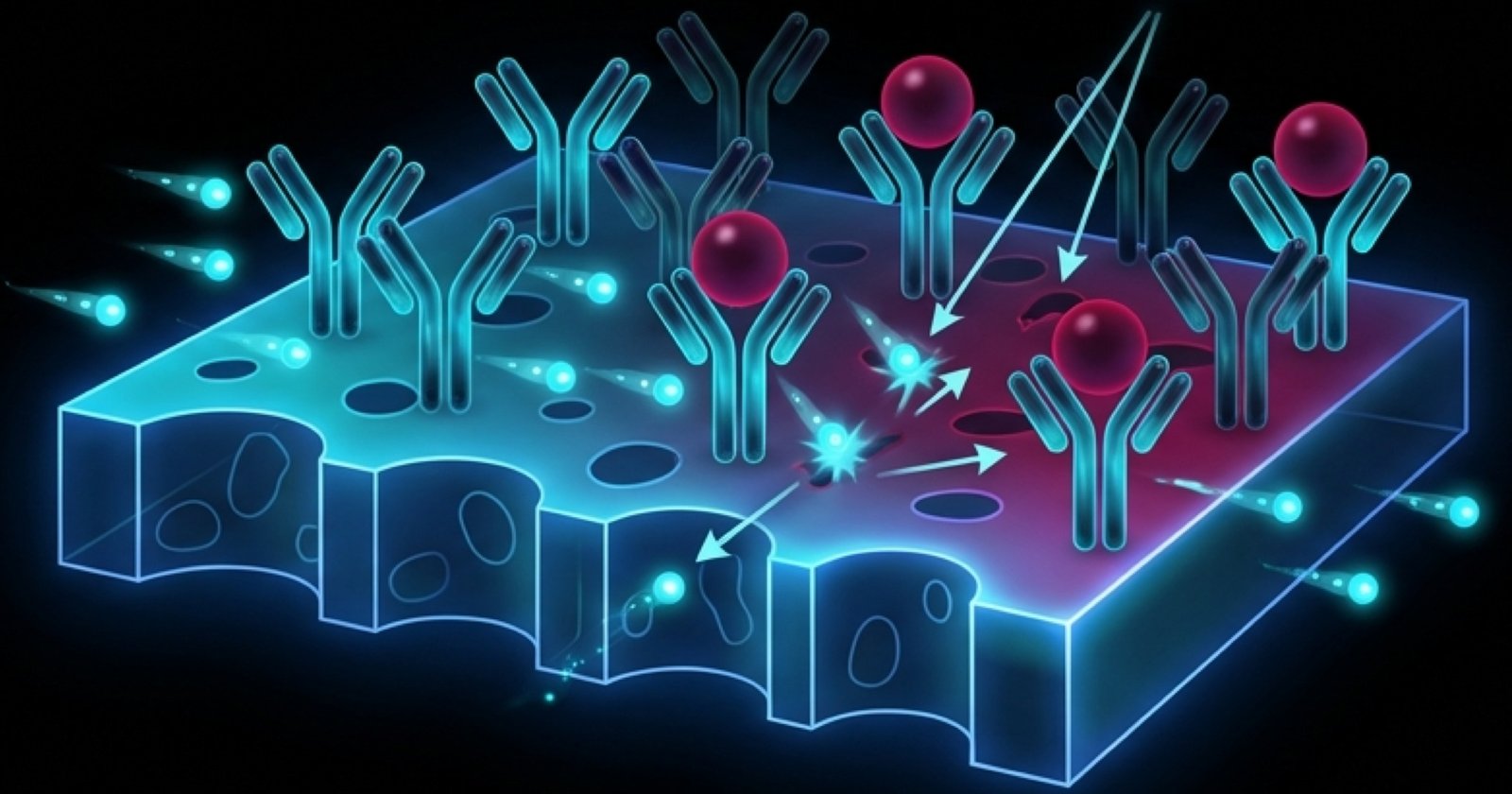
Electrochemical immunoassay on a disposable electrode. Amplified redox chemistry pushes antigen detection toward the picomolar floor — read by the impedance chip, not a laboratory.
Literature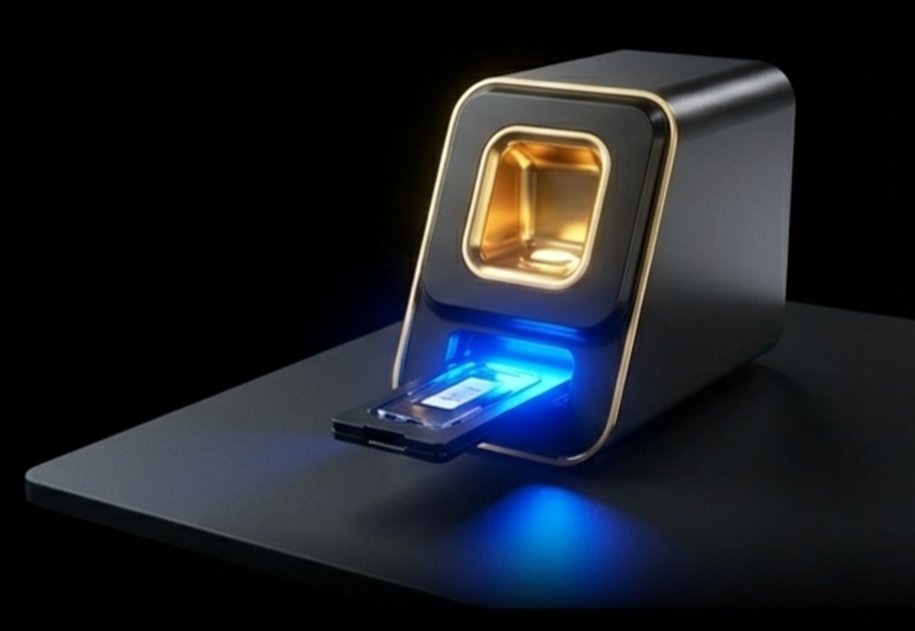
Photothermal PCR paper chips and cold-chain-free LAMP. Light-driven thermal cycling keeps amplification ultrafast without surrendering specificity — sample to answer in under 25 minutes.
Literature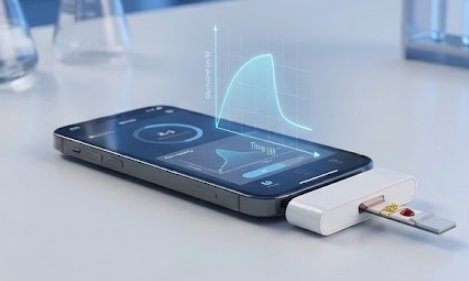
One strip, two physics: DC electrochemistry reads glucose while an AC impedance sweep reads hematocrit — so every result is corrected for the blood it came from.
Design intent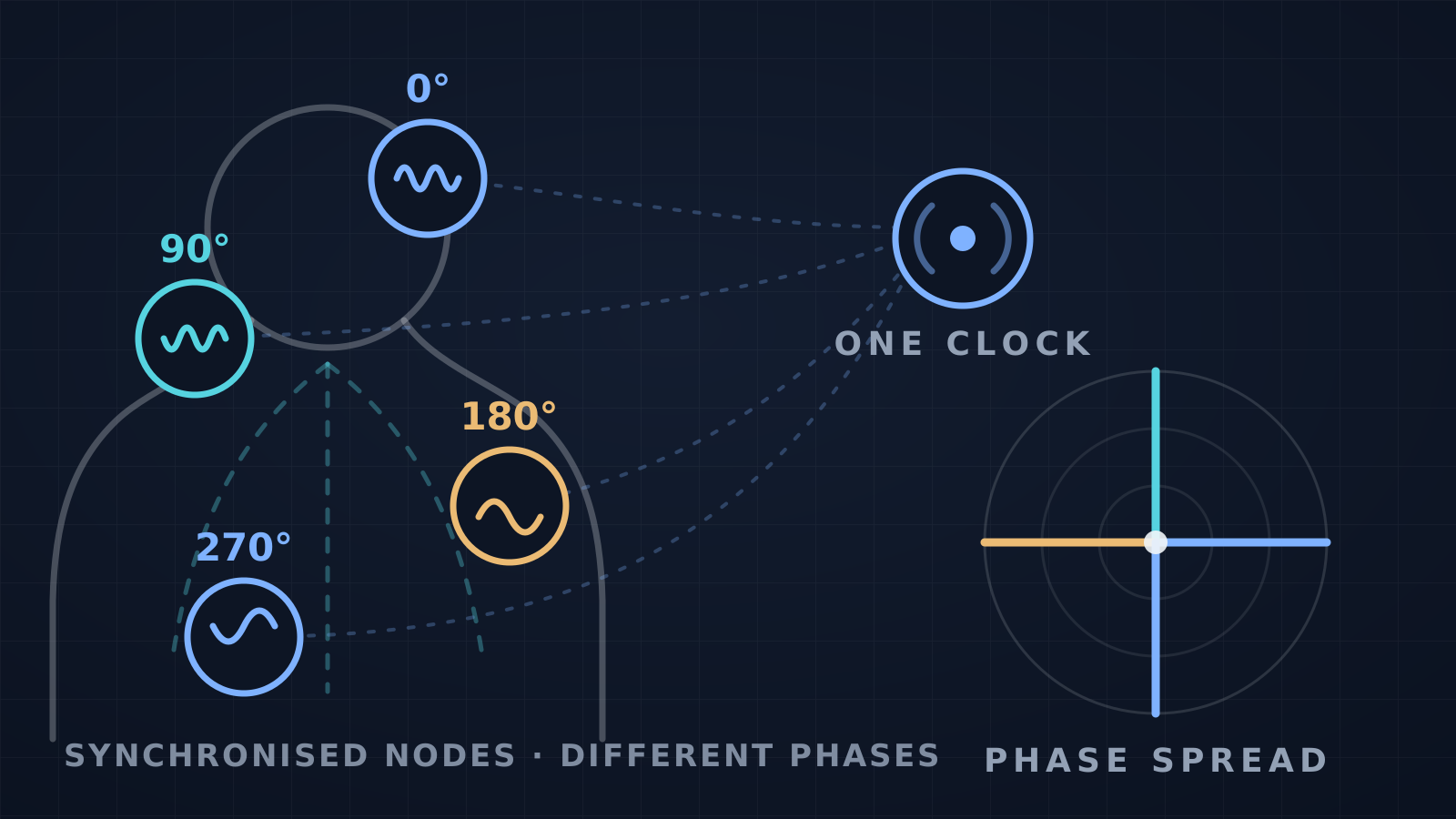
Flexible, multichannel, skin-conformal sensing. Sweat chemistry, continuous ECG monitoring and phase-controlled neuro-stimulation on the same ultra-low-power front-end that drives BEAT Connected.
Literature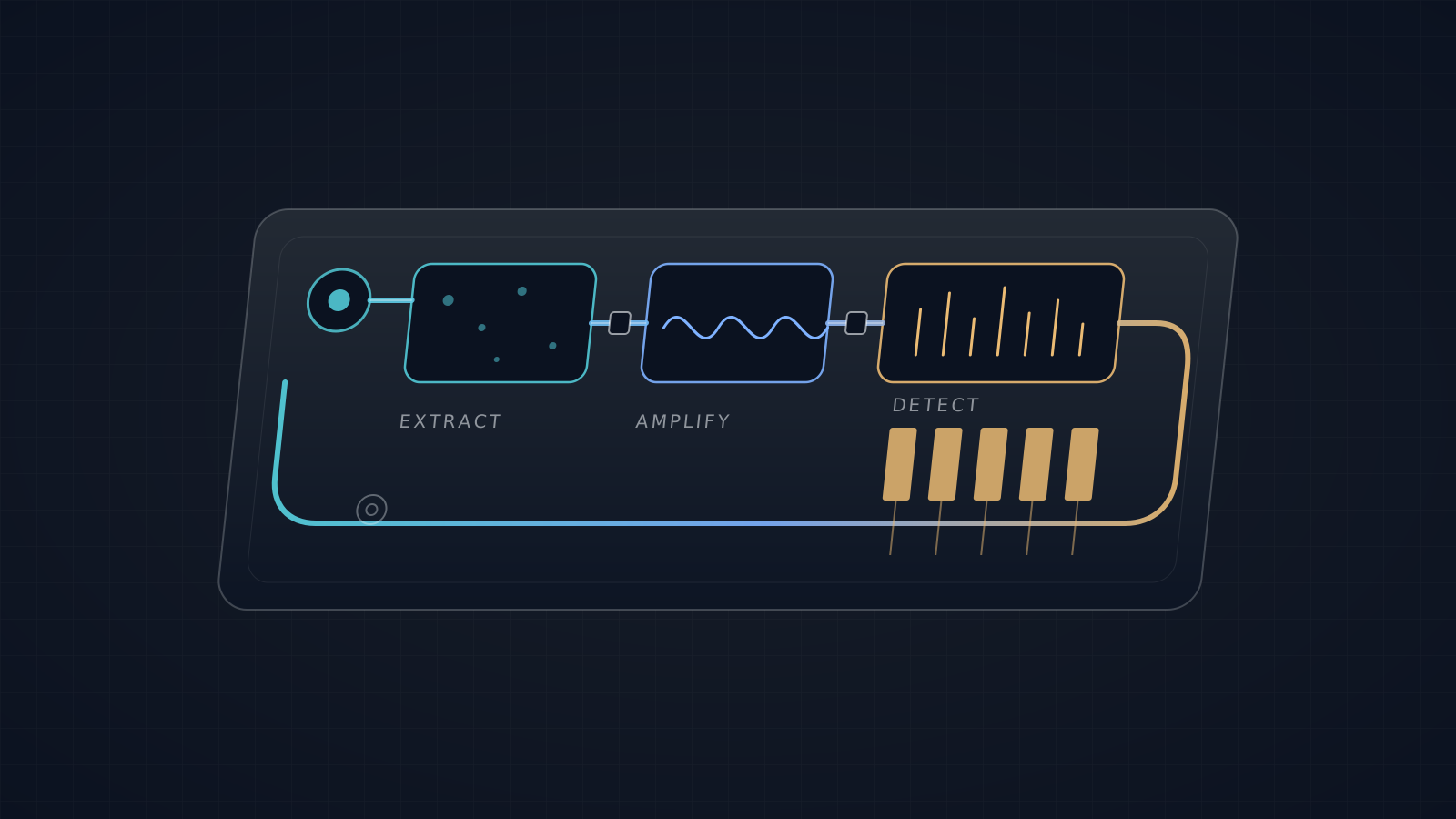
The whole assay in one sealed cartridge — extraction, amplification, detection — so contamination stays inside and the instrument shrinks below 250 grams.
Literature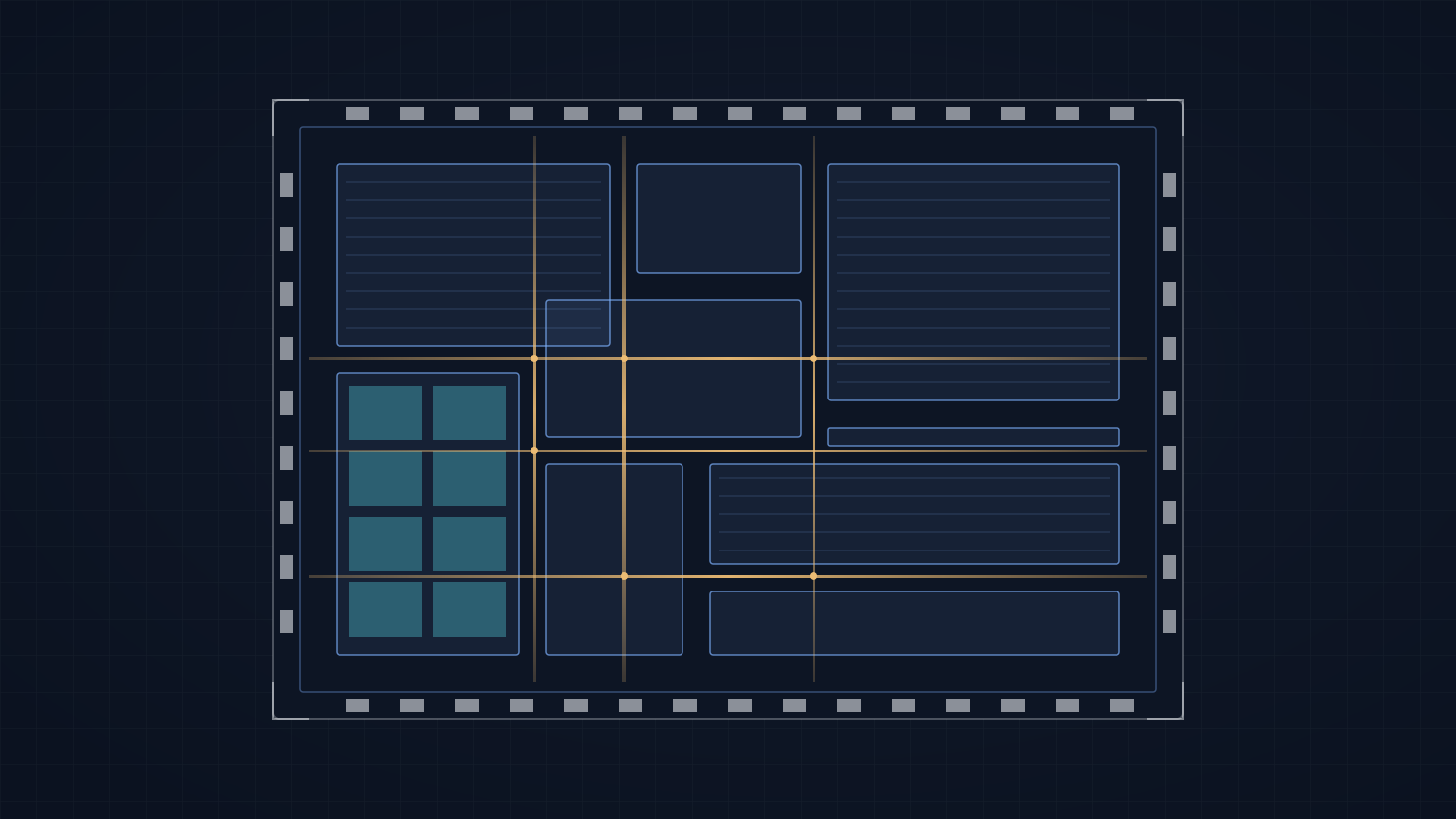
From specification to signed-off silicon and PCB in one automated open flow — timing closed, design rules clean, layout matching schematic, every gate re-run from source.
Tool verified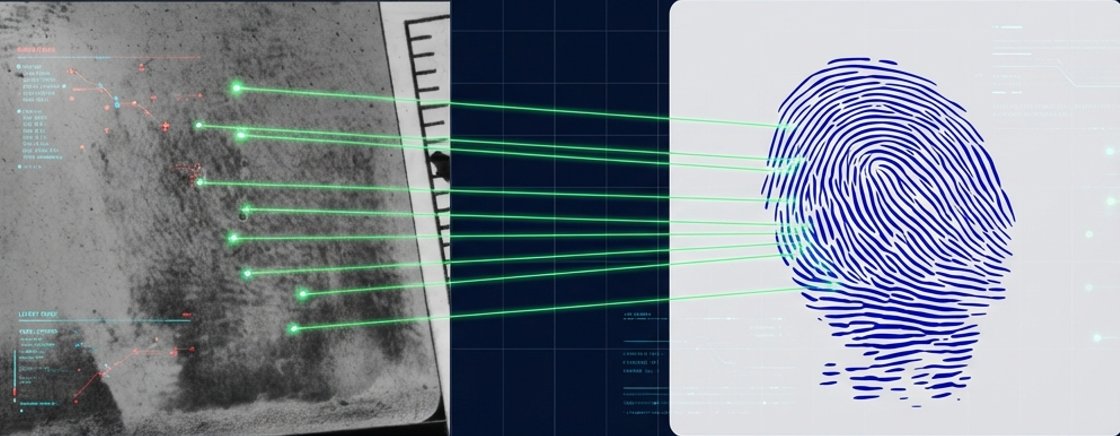
TruePrint reads the signal others discard: ridge flow reconstructed from latent and overlapped fingerprints, fused with fundus and EEG into one identity platform.
LiteratureCore competencies
A measurement front-end small enough to disappear into a device, chemistry that turns biology into current, and models that recover meaning from noise.
Ultra-low power, ultra-compact impedance measurement. The world’s smallest, widest-band (0.1–200 kHz) Cortex‑M4 intelligent impedance chip.
Published spec EIS platformElectrochemical immunoassay, photothermal PCR and cold-chain-free LAMP — molecular diagnostics that leave the laboratory.
Literature Biosensor platformTruePrint reconstructs ridges from latent fingerprints, separates overlapping layers, and fuses fundus and EEG signal into one platform.
Certified software AI platformThe bio-digital twin
Every UCARETRON platform runs the same four steps. The difference between them is how much of it fits inside the device in your hand.
A disposable electrode turns an antigen–antibody binding event, or a temperature cycle, into current.
Biology Electrical signal
The impedance chip sweeps 0.1 Hz to 200 kHz and records the complex response at every frequency.
0.1 Hz 200 kHz
Fourier analysis moves the signal into the frequency domain, where equivalent-circuit structure becomes visible.
Time domain Frequency domain
Machine learning reads the non-linear shape of the spectrum — including phase — and returns a result.
Measurement Decision
Product
A connected bio-electric platform for the nervous system. Heart-rate variability, nerve-conduction timing and a drawn trace go in; a model infers state; precisely phased stimulation across wirelessly synchronised nodes comes out — small enough to wear, precise enough to matter.
Closed loop. Stimulation as a response to a measurement — HRV-based anxiety prediction shapes a cranial stimulation pattern only when warranted.
Stereo, phase-controlled nodes. Multiple nodes, one wireless clock, deliberately different phases — no single pattern for the body to habituate to.
Nerve function as timing. Relative conduction time between two pathways, with the electrode-contact impedance factored out.
Design intent · public patent record
Proof
Patents in the national registry, certificates from accredited bodies, papers with a DOI. Every one of these can be looked up by someone who does not take our word for it.
Six labels, in order of how directly a claim touches reality. They are labels for the kind of fact, not a score — a peer-reviewed primary source and one of our own single measurements are different things, not better and worse ones.
Confirmed on real hardware, in a real experiment, on a real sample.
Re-executed and reproduced in design tooling — EDA, CAD, simulation.
An official published specification or public record, ours or an issuing body’s.
Grounded in a peer-reviewed primary source with a DOI or PMID.
Our own design intent or proposal. Not yet measured.
A drawing made to explain a concept. Never data.
Latest
Work with us
Pick the conversation you actually want to have — it reaches the right desk faster.